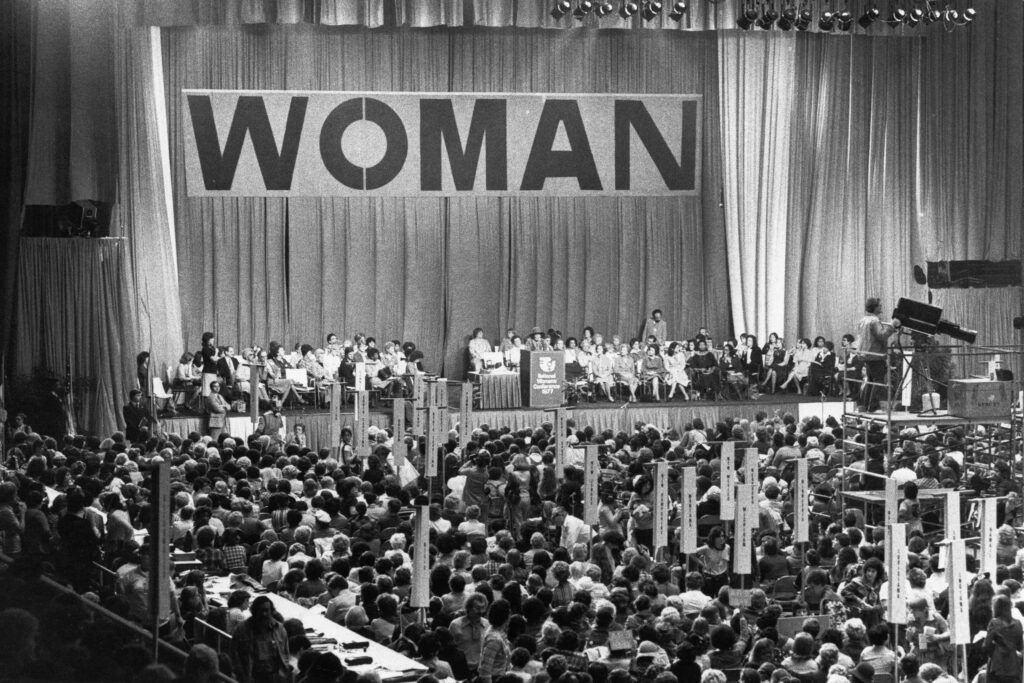
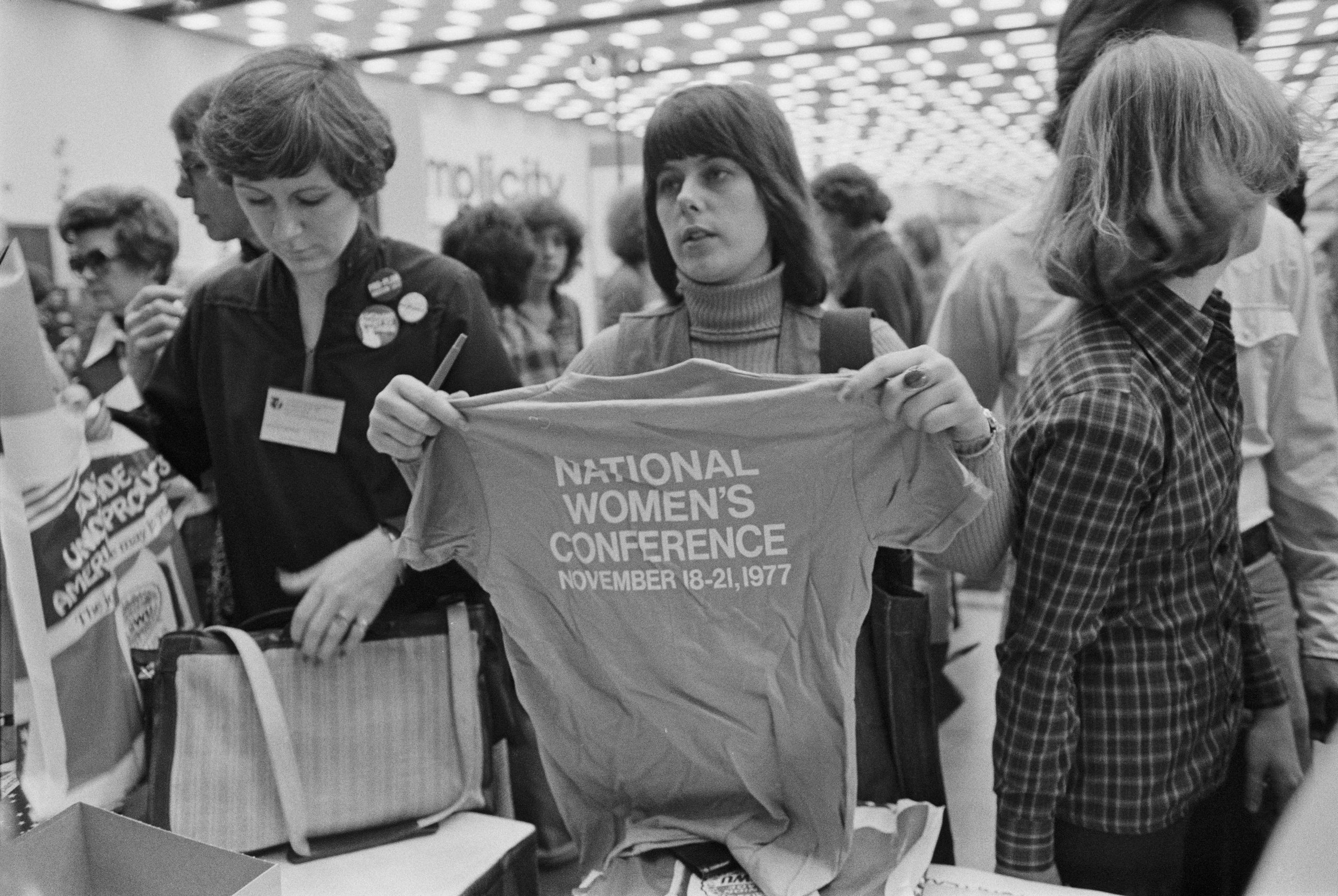
Forty-nine years ago, my grandmother, Hesung Chun Koh, was in Houston, Texas, for the opening of the 1977 National Women’s Conference.
An immigrant from Korea, she came to America for college. By 1977, she’d raised six children, become the first Korean American woman to earn a PhD in the United States, and begun teaching sociology and gender studies courses at local universities. Her scholarship and reputation as a teacher drew the attention of Connecticut Governor Ella T. Grasso, America’s first woman governor elected in her own right. Governor Grasso invited my grandmother to participate in a state meeting organized by the National Commission on the Observance of International Women’s Year. From there, my grandmother was nominated to serve as a delegate-at-large at the National Women’s Conference.
In Houston, my grandmother joined some 2,000 delegates and thousands more observers who traveled from across the country and around the world for the first and only federally-funded gathering of its kind in U.S. history.
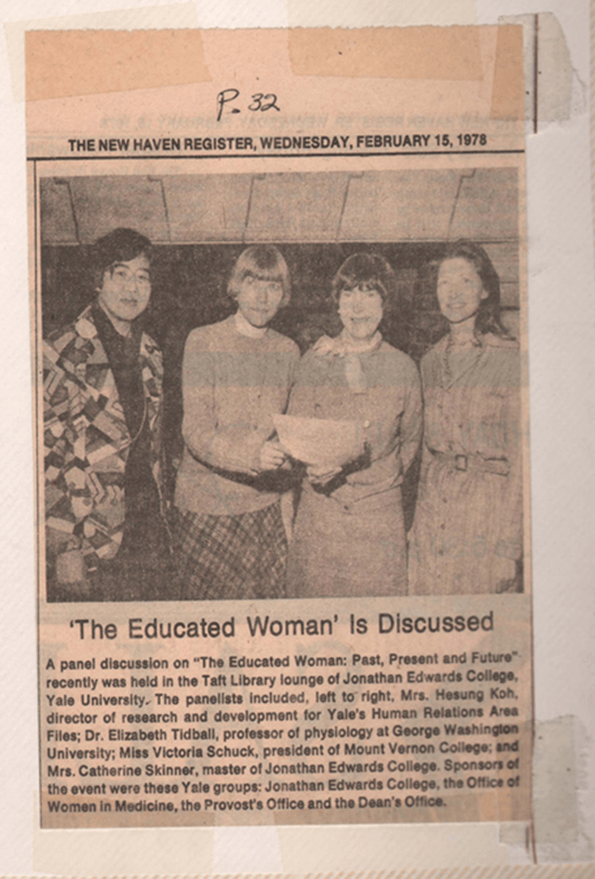

Hesung Chun Koh
Reflecting on the National Women’s Conference, Gloria Steinem called it “a constitutional convention for the female half of the country” and “the most important event that nobody knows about.”
During opening ceremonies, the crowd joined hands and recited a “Pledge of Unification,” which began: “We are here in America at last to move history forward.”
The delegates were tasked with finalizing and adopting a National Plan of Action to improve the lives of women in the United States. Over four days, they debated, organized, made new friends, discussed their differences, worked through conflict, and unearthed shared experiences. By the close of the conference, they’d produced something extraordinary: a national agenda for women by women. They set out to achieve their vision by 1985, the end of the United Nations Decade for Women.
I was born a year later, in 1986. The progress my grandmother and countless others fought for made my life possible. Yet today, as a woman in America, I have fewer rights than my grandmother had half a century ago. At this rate, a child born now won’t experience global gender equality in their lifetime. We are losing decades of hard-won gains and moving backward in this fight.
However, history teaches us that progress often comes fastest right after the hardest stretches, and we may already be seeing that shift. Just two weeks ago, voters in Virginia and Nevada enshrined the right to an abortion into their state constitutions, and Missouri voters refused to relinquish the reproductive right they secured two years before. In Virginia, voters also approved a constitutional amendment to repeal a nearly 20-year-old ban on same-sex marriage. In six states, candidates became the first trans and non-binary people elected to their legislatures. And in Texas, voters rejected efforts to focus on performative masculinity and anti-trans attacks over issues that materially impact their day-to-day lives.
Americans are showing up, and ready for what comes next. As we approach the conference’s 50th anniversary, it’s time to build on this momentum and fulfill the promise set forth in Houston.
What if we harnessed the spirit of the National Women’s Conference for a new era? What if, by the 50th anniversary next November, we had a shared vision for gender equality, written by all of us, and a path to reach it within a generation?
That’s why I started Moving History Forward, an initiative that builds on the legacy of those who came before us to shape a collective vision for what comes next. Over the next year, we want to hear from you. How do you imagine the future of gender equality? Tell us what you’d leave behind, what you’d carry forward, and what you want for the next generation. Your input will help build the vision we bring to the 50th anniversary.
In 1977, my grandmother and thousands like her declared that they were here to move history forward. Nearly 50 years later, it’s our turn.
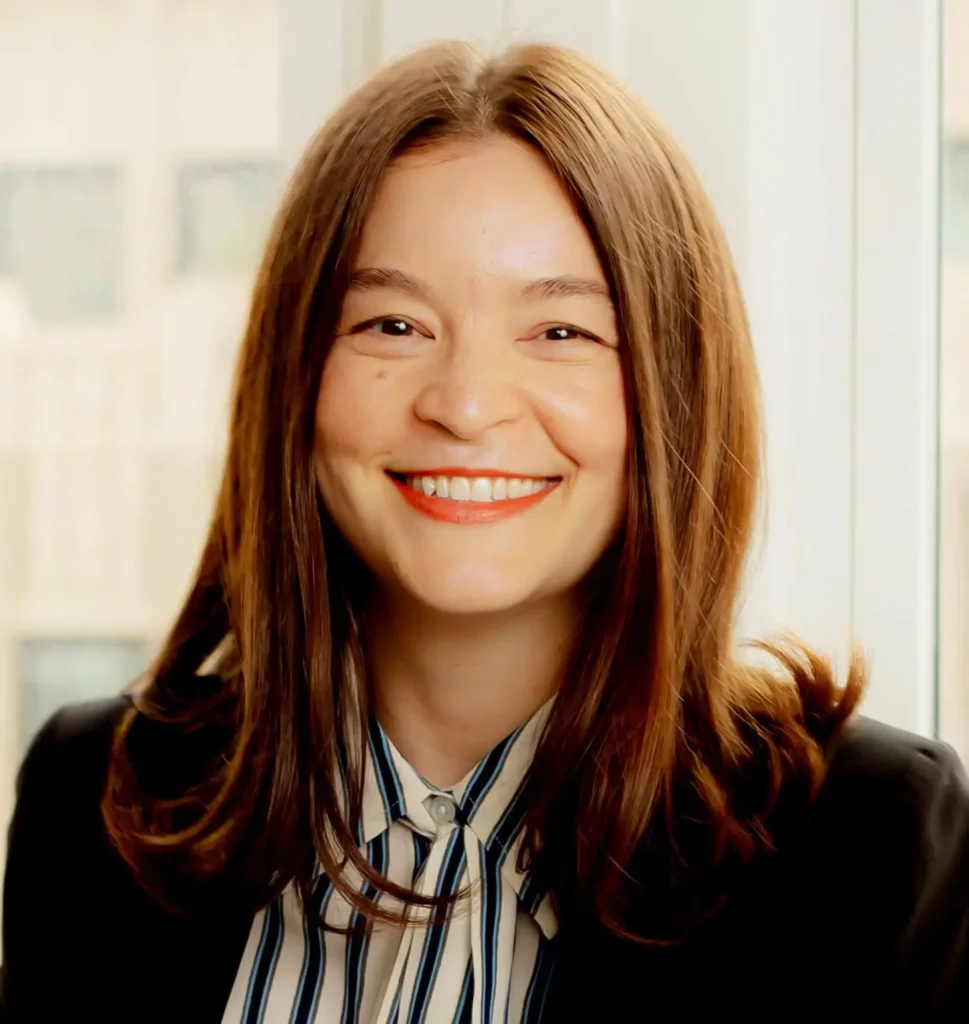
Emily Koh
Founder and Executive Director
Moving History Forward