News | November 18, 2026

“We Are Here to Move History Forward”

Moving History Forward launches today and invites you to shape the future of gender equality.

Houston Chronicle/Hearst Newspapers via Getty Images

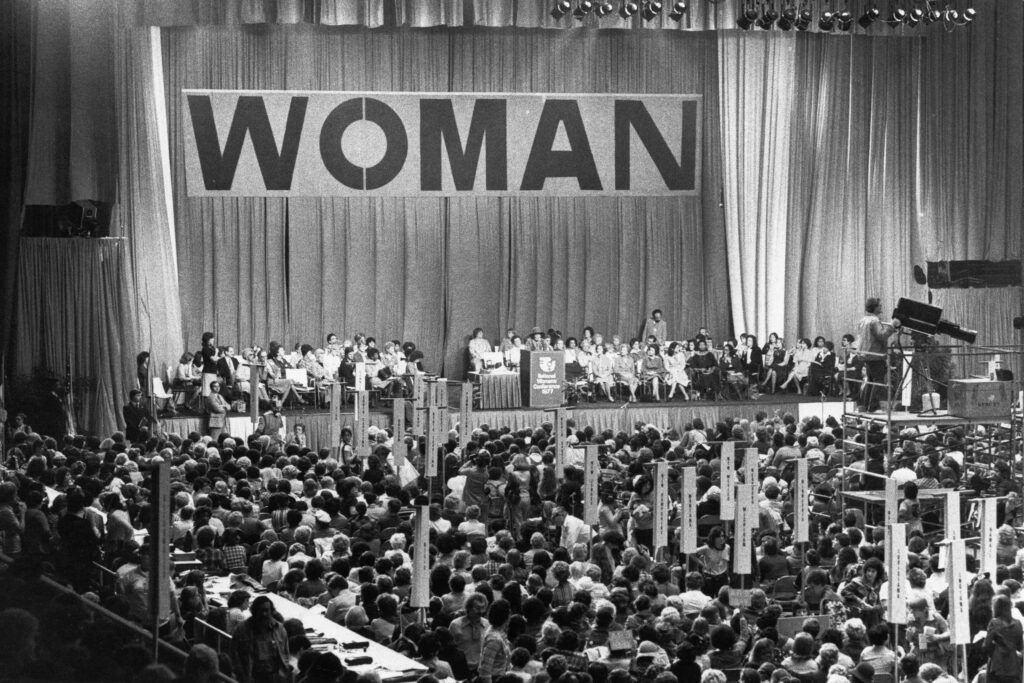
Forty-nine years ago, my grandmother, Hesung Chun Koh, was in Houston, Texas, for the opening of the 1977 National Women’s Conference.

An immigrant from Korea, she came to America for college. By 1977, she’d raised six children, become the first Korean American woman to earn a PhD in the United States, and begun teaching sociology and gender studies courses at local universities. Her scholarship and reputation as a teacher drew the attention of Connecticut Governor Ella T. Grasso, America’s first woman governor elected in her own right. Governor Grasso invited my grandmother to participate in a state meeting organized by the National Commission on the Observance of International Women’s Year. From there, my grandmother was nominated to serve as a delegate-at-large at the National Women’s Conference.

In Houston, my grandmother joined some 2,000 delegates and thousands more observers who traveled from across the country and around the world for the first and only federally-funded gathering of its kind in U.S. history.
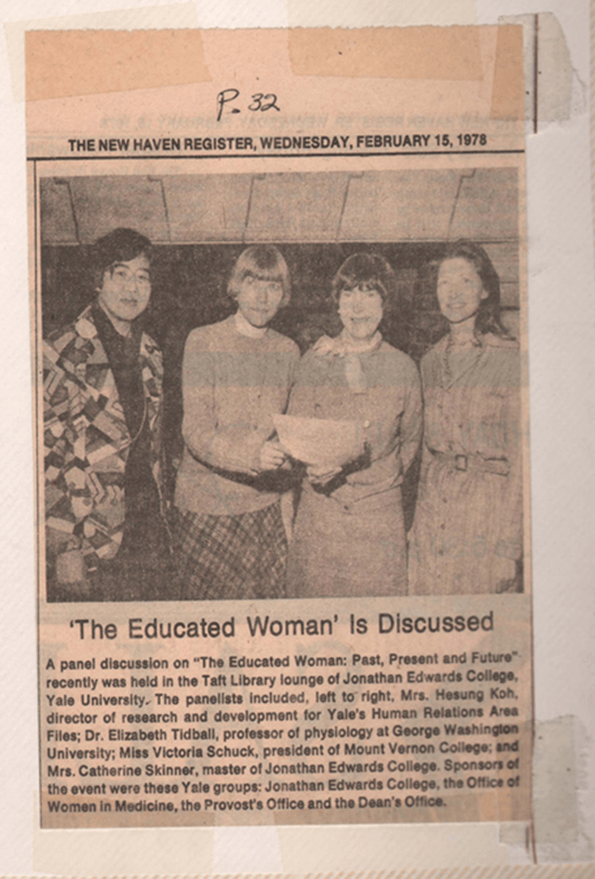
Hesung Chun Koh

Reflecting on the National Women’s Conference, Gloria Steinem called it “a constitutional convention for the female half of the country” and “the most important event that nobody knows about.”

During opening ceremonies, the crowd joined hands and recited a “Pledge of Unification,” which began: “We are here in America at last to move history forward.”

The delegates were tasked with finalizing and adopting a National Plan of Action to improve the lives of women in the United States. Over four days, they debated, organized, made new friends, discussed their differences, worked through conflict, and unearthed shared experiences. By the close of the conference, they’d produced something extraordinary: a national agenda for women by women. They set out to achieve their vision by 1985, the end of the United Nations Decade for Women. 
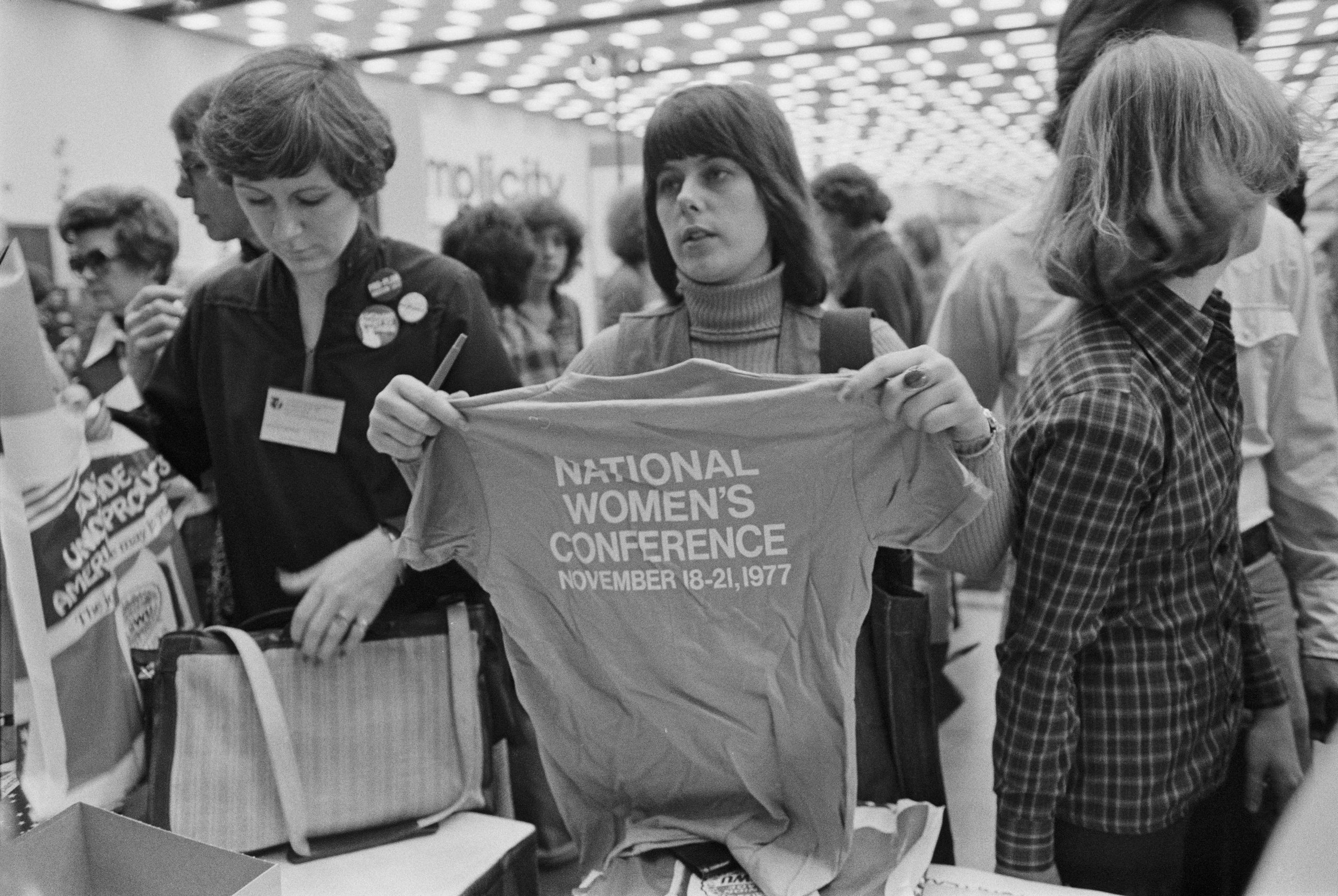
Owen Franken – Corbis via Getty Images

I was born a year later, in 1986. The progress my grandmother and countless others fought for made my life possible. Yet today, as a woman in America, I have fewer rights than my grandmother had half a century ago. At this rate, a child born now won’t experience global gender equality in their lifetime. We are losing decades of hard-won gains and moving backward in this fight. 

However, history teaches us that progress often comes fastest right after the hardest stretches, and we may already be seeing that shift. Just two weeks ago, voters in Virginia and Nevada enshrined the right to an abortion into their state constitutions, and Missouri voters refused to relinquish the reproductive right they secured two years before. In Virginia, voters also approved a constitutional amendment to repeal a nearly 20-year-old ban on same-sex marriage. In six states, candidates became the first trans and non-binary people elected to their legislatures. And in Texas, voters rejected efforts to focus on performative masculinity and anti-trans attacks over issues that materially impact their day-to-day lives.

Americans are showing up, and ready for what comes next. As we approach the conference’s 50th anniversary, it’s time to build on this momentum and fulfill the promise set forth in Houston.

What if we harnessed the spirit of the National Women’s Conference for a new era? What if, by the 50th anniversary next November, we had a shared vision for gender equality, written by all of us, and a path to reach it within a generation?

That’s why I started Moving History Forward, an initiative that builds on the legacy of those who came before us to shape a collective vision for what comes next. Over the next year, we want to hear from you. How do you imagine the future of gender equality? Tell us what you’d leave behind, what you’d carry forward, and what you want for the next generation. Your input will help build the vision we bring to the 50th anniversary. 


In 1977, my grandmother and thousands like her declared that they were here to move history forward. Nearly 50 years later, it’s our turn.

Emily Koh
Founder and Executive Director
Moving History Forward


More News

News | November 18, 2026

“We Are Here to Move History Forward”

Moving History Forward launches today and invites you to shape the future of gender equality.

Join us to move history forward

Get updates on our work and ways to get involved on the road to the 50th anniversary.

Thank you for joining us. We’ll be in touch soon.

Group of friends laughing together

Privacy Policy

Moving History Forward is committed to protecting your online privacy. The following explains what information we collect about you, how we use it, and which choices you have regarding this information. This policy applies to all information collected from or submitted to movinghistoryforward.org.

What We Know About You

In general, you can browse this site without telling us who you are or revealing any personal information about yourself. As with many websites, this site automatically recognizes your domain name, IP address, browser version, operating system, and the referring site you passed through to reach our site. These do not specifically identify you. This information is used for website traffic analysis and is treated confidentially.

Any additional information you provide us—such as your name, organization, address, telephone number, or email address—is collected only upon your consent. You must, for example, provide such information if you sign up for an email newsletter or make an online contribution. 

How We Use What We Learn

Information we collect is used to improve the content of our site and to provide you with any information or support you’ve requested. We also compile and use this information so that we may keep you apprised of Moving History Forward events and updates. Information gathered on online contributions is compiled by our fiscal sponsor, New America, to confirm receipts of donations or comply with financial regulations and the law.

How We Use “Cookies” and Why

Our site uses “cookies” to improve your navigation through the site and to help us make the site more useful to you. A “cookie” is a small text file on your computer’s hard drive that our site uses to collect information about how you use our site. The cookie transmits this information back to our site each time you visit a page on our site, thus allowing us to identify our most popular pages, features, and data. We use this information to improve our site to more effectively meet your needs.

Our site uses cookies to communicate with Google Analytics for web traffic analysis. These third-party cookies are collected and managed anonymously and do not contain any personally identifying information. To best serve you, our Google Analytics data retention does not automatically expire.

You can control or delete cookies as you wish. You can delete all cookies that are already on your computer and you can set most browsers to prevent them from being placed.

Choices You Have

If you wish to opt out of receiving communications from us at any time, please email us at [email protected]. You can also contact [email protected] to request to see your personal data, to request that we correct or delete your personal data, or to raise a complaint on how we have handled your personal data. You also have the right to lodge a complaint with the relevant supervisory authority in your home country.

How We Will Protect Your Personal Information

We take appropriate physical, electronic, and managerial measures to ensure that we keep your information secure, accurate, and up-to-date. We will keep your data only as long as is reasonable and necessary or until you ask us to delete it.

We will keep your information confidential except where disclosure is required or permitted by law (for example, to government bodies and law enforcement agencies).

We may use third parties to process your information on our behalf. Visitors should consult the privacy policies of those third parties, including Campaign Monitor and Google Analytics.

Links to Other Sites and Third Party Page Elements

This site contains links to other sites and third-party elements on some pages, including those produced by other organizations. Moving History Forward is not responsible for the privacy practices or the content of any outside sites. Visitors should consult the privacy policies of the third parties listed above to learn more. 

Donor Privacy and Online Transactions

The privacy and security of our donors’ personal information is very important to us. New America processes all donations to Moving History Forward, and will not sell, share, or trade our donors’ names or personal information with any other entity, nor send mailings to our donors on behalf of other organizations. This policy applies to all information received by Moving History Forward, both online and offline, as well as through any electronic, written, or oral communications. New America does publicly acknowledge all financial support on the New America website and in annual reports by identifying both the donor and the level of support. For more information, read the Gift Guidelines.

New America’s website uses third-party vendors, WePay and Stripe, to process online donations. Our donors’ information collected through these vendors will only be used for purposes necessary to process the donation. New America does not collect and store credit card or other secure billing information. For more information, read the WePay and Stripe privacy policies.

Notification of Changes

If we decide to change this Privacy Policy, we will post those changes to this page so that you are always aware of what information we collect and how we use it.

Any Questions?

For more information on our privacy policy, please contact [email protected].